How RAG Architecture Is Transforming Enterprise AI Systems
AI Architecture
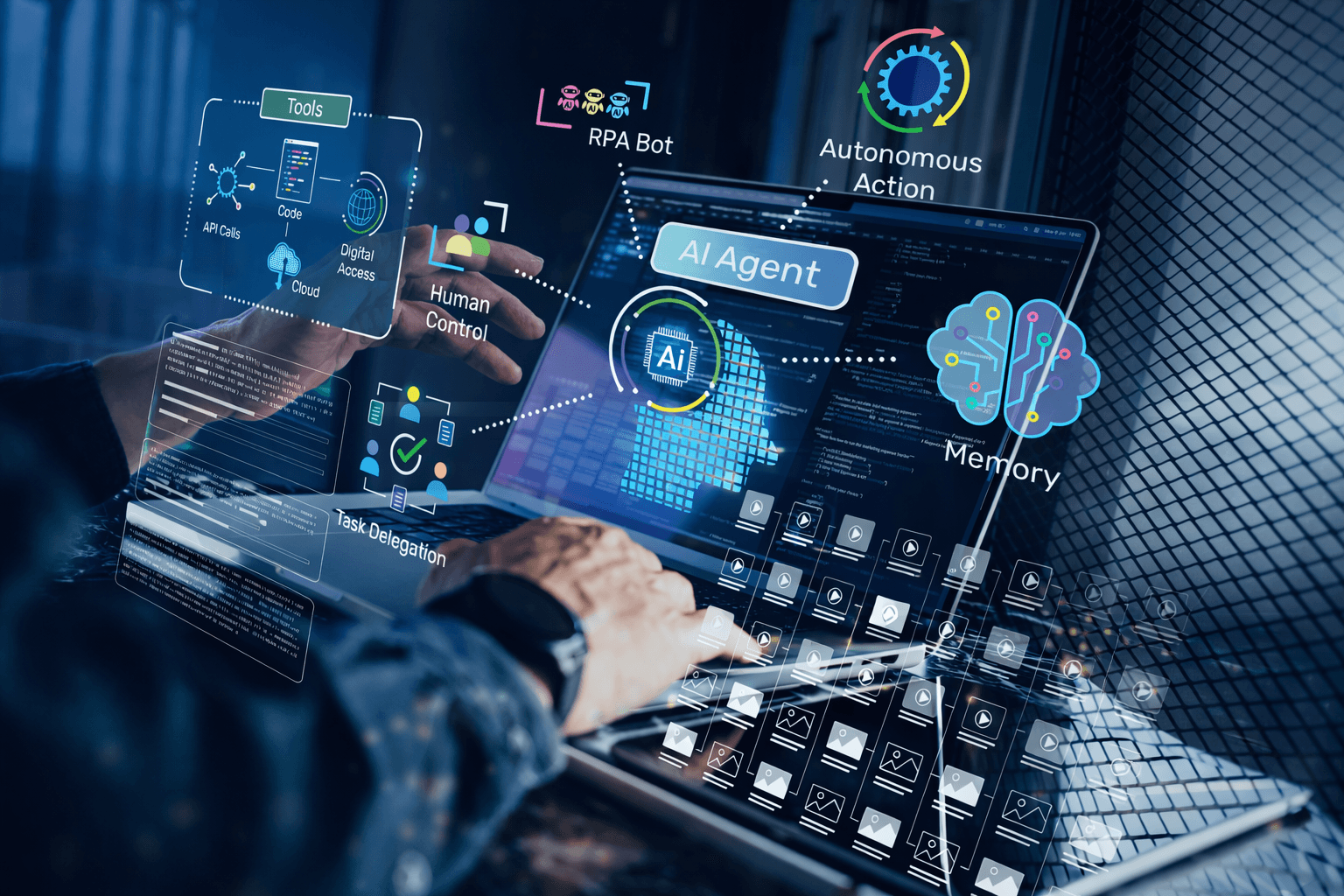
Artificial Intelligence has evolved rapidly, but traditional large language model (LLM) implementations often struggle in enterprise environments. The core issue is simple: standalone AI models lack real-time access to private, structured business data. This limitation results in inaccurate responses, hallucinations, and limited operational value.
Retrieval-Augmented Generation (RAG) architecture solves this problem by combining the reasoning power of large language models with dynamic knowledge retrieval from enterprise data sources. The result is accurate, secure, and context-aware AI systems built for real-world business use.
What Is RAG Architecture?
RAG (Retrieval-Augmented Generation) is an AI framework that enhances LLM responses by retrieving relevant information from internal knowledge bases before generating an answer.
Instead of relying solely on pre-trained model knowledge, RAG systems:
Convert enterprise documents into vector embeddings
Store them inside a vector database
Retrieve the most relevant information during a query
Feed that context into the LLM
Generate accurate, grounded responses
This architecture transforms AI from a generic conversational model into a business-aligned intelligence system.
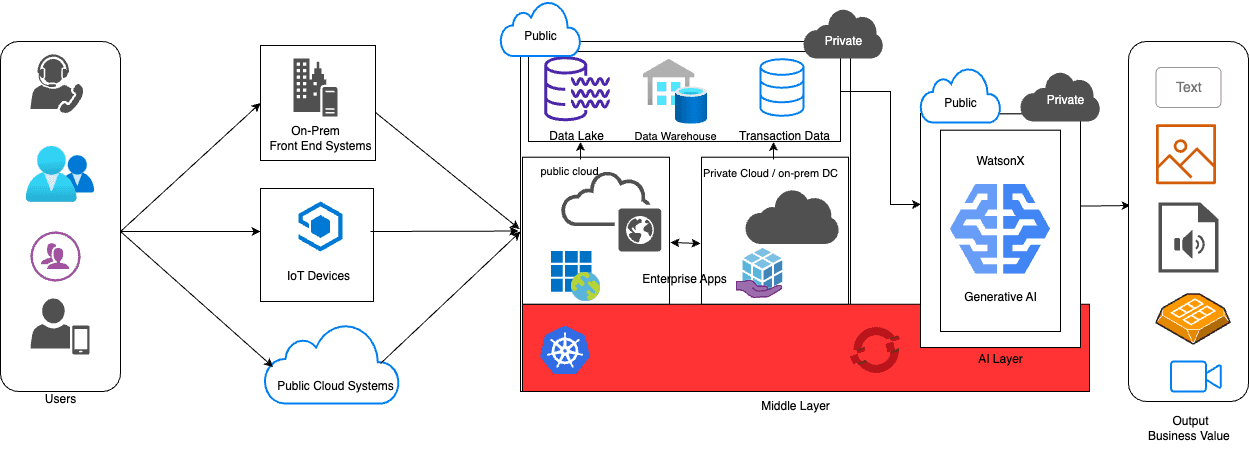
Why Traditional Enterprise AI Falls Short
Many enterprises adopt generative AI without structured data integration. Common issues include:
AI hallucinating incorrect policy information
Inability to access real-time internal data
Security risks when using public models
Limited explainability in compliance-driven industries
Lack of integration with operational systems
Without RAG, enterprise AI becomes a chatbot. With RAG, it becomes a decision-support engine.
How RAG Is Transforming Enterprise Systems
1. Context-Aware Decision Making
RAG allows AI systems to access up-to-date company policies, financial records, HR documents, CRM data, and technical manuals in real time. This enables AI to generate responses aligned with current business rules.
Industries benefiting include:
Mortgage & lending platforms
Healthcare document processing
Recruitment & HR systems
Legal and compliance departments
Enterprise SaaS platforms
2. Reduced Hallucinations & Improved Accuracy
By grounding AI responses in retrieved enterprise documents, RAG significantly reduces hallucinations. This is critical for regulated industries like finance and healthcare where incorrect information can create compliance risks.
3. Enterprise Knowledge Management Reinvented
RAG transforms scattered documents into an intelligent knowledge assistant. Instead of employees manually searching PDFs or internal portals, AI retrieves relevant content instantly.
Benefits include:
Faster onboarding
Reduced internal support tickets
Improved productivity
Better knowledge retention
4. Secure & Scalable Architecture
Modern RAG systems are built on:
Vector databases (Pinecone, Weaviate, OpenSearch)
Microservices-based backend architecture
Kubernetes container orchestration
Secure cloud deployment (AWS, Azure, GCP)
Role-based access controls
This ensures AI systems remain scalable, secure, and compliant.
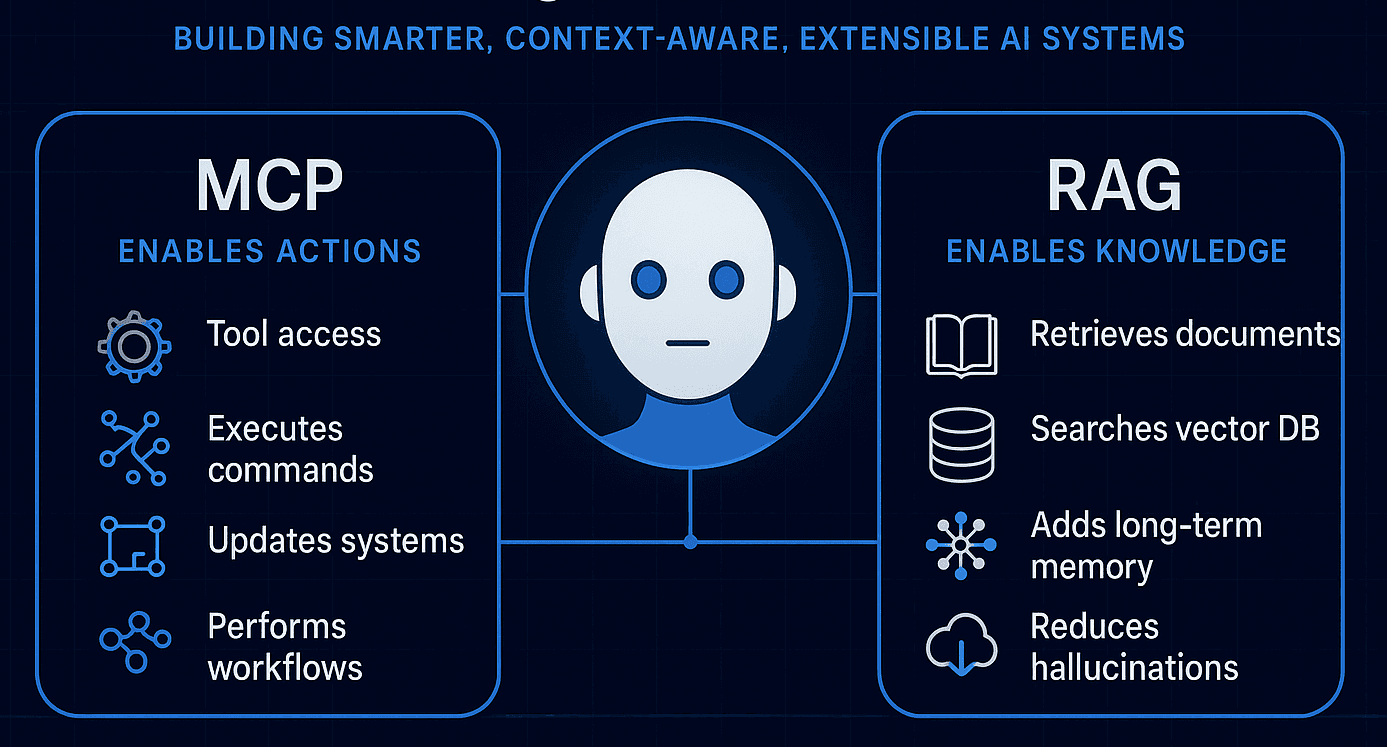
RAG + MCP: Moving From Knowledge to Action
While RAG enables accurate knowledge retrieval, Model Context Protocol (MCP) infrastructure allows AI agents to securely execute tasks within enterprise systems.
Together:
RAG provides intelligence
MCP enables execution
LLM provides reasoning
This combination turns AI into a secure digital workforce capable of performing real business tasks.
Real Enterprise Applications of RAG
RAG architecture is already transforming:
AI underwriting platforms in fintech
Intelligent clinical document systems in healthcare
Recruitment automation platforms
Enterprise knowledge copilots
Customer support AI agents
Organizations that adopt RAG early gain a competitive advantage by turning data into real-time intelligence.
The Future of Enterprise AI Is Grounded Intelligence
As enterprises scale AI adoption, standalone models will no longer be sufficient. Secure, context-aware, and system-integrated AI powered by RAG architecture will become the standard.
RAG is not just a technical enhancement. It is the foundation for building production-ready, enterprise-grade AI systems that deliver measurable ROI.
Are you looking to implement a RAG system for a specific business use case, or are you more interested in the technical stack (vector databases, LLM orchestration) behind it?
Related Reads for You
Discover more articles that align with your interests and keep exploring.
Contact us
Feel free to reach out to us using the options below, and our dedicated team will respond to your inquiries promptly.

Have a Challenge or an Idea?
Fill out the form, and let’s talk about how we can support your business with tailored solutions.

Book a free consultation
By submitting this form you agree to our Privacy Policy. Optimum may contact you via email or phone for scheduling or marketing purposes.